- Size
- Smallest
- Small
- Small to Medium
- Medium
- Large
- Giant
- Characteristics
- Smartest
- Hypoallergenic
- Fluffy
- Best Guard
- Best Family
- Best for Kids
- Low Shedding
- Healthiest
- Police Dogs
- Most Calm
- Quietest
- Color
- White
- Black
- Grey
- Brown
- Blue
- Red
- Coat
- Hairless
- Short
- Long
- Origin
- Japan
- China
- Australia
- Germany
- Italy
- United States
- France
- Group
- Hound
- Terrier
- Herding
- Toy
- Working
- Sporting
The Most Anxious Dog Breeds and How to Keep Them Calm
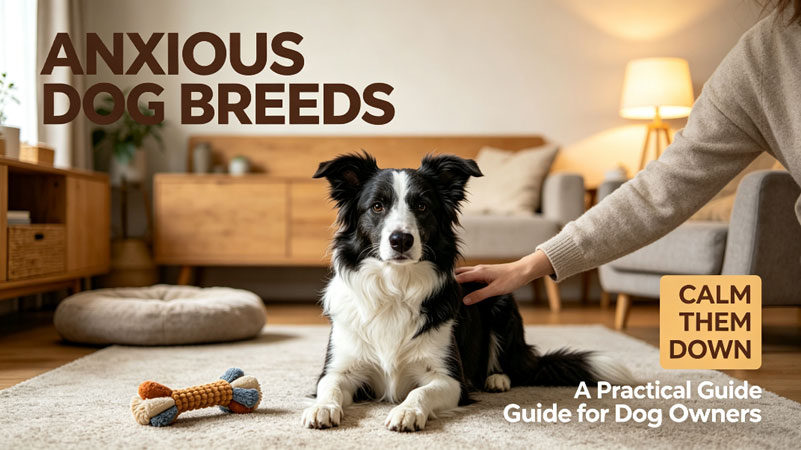
Image generated by AI
Certain dogs can nap through a fireworks finale. Others tremble when a garbage truck rolls past two streets away. When a dog turns out nervous, the owner usually points the finger inward – not enough training, too much babying – yet genetics deserve a much bigger share of the blame. Every breed once had a job description. Herding sheep demanded hair-trigger reflexes; guarding a farmhouse demanded suspicion. Strip away the job, move the dog into an apartment, and those same instincts start leaking out as nervous energy with nowhere to go.
Figure out whether that wiring came with your breed and the whole management picture shifts. What looks like bad behavior is usually a working brain with nowhere to put itself.
Why Anxiety Runs in Bloodlines
Selective breeding shaped more than coats and ear shapes. Herding breeds were selected for hair-trigger alertness to movement. Guardian breeds for suspicion of strangers. Companion breeds for intense attachment to one person. Each of those traits has a shadow side – reactivity, wariness, separation panic – and the shadow shows up when the dog's daily life gives the trait no outlet.
The genes set the potential; the living situation decides whether it fires. Give a Border Collie three hours of real work every day and compulsive habits rarely take root. Park that identical dog in a quiet condo on a two-short-walks schedule, and shadow-chasing can show up before the first season changes.
Calming an Anxious Dog, Regardless of Breed
Across breeds, the same core approach keeps working: give the dog somewhere to spend its energy. That means physical exercise sized to what the breed was built for, and it equally means brain work – scent games, puzzle feeders, short training sessions. A mentally spent dog settles in a way a merely leg-tired dog never quite does. A predictable daily routine does more than most owners expect, since anxious dogs read schedule changes as threats.
For the rough moments – storms, travel, guests, home renovations – many owners add calming support, and the options have improved a lot in the past decade. Among them, vet-approved CBD dog treats have become a standard tool for situational anxiety, working through the dog's endocannabinoid system to soften the stress response without sedating them. The dog stays alert, just less frantic. The usual guideline sits around 1mg per pound of body weight, and the treats do their best work when started several days ahead of a known stressor rather than the morning it arrives. Beyond CBD, there are pheromone diffusers and snug anxiety wraps – hit-or-miss tools that transform some dogs and leave others completely unmoved, which is exactly why a trial run should happen before the night you actually need them.
For severe cases – dogs who injure themselves, destroy doors, or can't be left alone at all – skip straight to a veterinary behaviorist. Chronic anxiety compounds, and early intervention beats years of management.
Quick Tip
Track your dog's triggers in your phone notes for two weeks – time, situation, reaction. Patterns emerge fast, and a specific list ("panics at truck engines, fine with thunder") makes any vet consultation twice as productive.
The Breeds That Worry Most
Border Collie. The smartest breed on most rankings, and intelligence has a cost. A Border Collie without work invents work – spinning, shadow-chasing, obsessive fixation on the cat. Their anxiety usually looks like compulsion rather than trembling.
German Shepherd. Bred to guard and to bond deeply with one handler. That combination produces dogs who scan every environment for problems and unravel when separated from their person. Separation anxiety runs high in the breed.
Vizsla. The original velcro dog. Vizslas were bred to hunt within sight of their handler all day, and they take the arrangement literally – many can't settle in a different room from their owner, let alone an empty house.
Chihuahua. Small dogs live in a world of giants, and Chihuahuas compensate with vigilance. Their trembling, barking, and snapping usually get read as attitude when the underlying driver is fear.
Toy and Miniature Poodle. Sharp minds in small packages, keenly tuned to their owner's moods. A stressed household produces a stressed Poodle almost immediately.
Cocker Spaniel. Sweet-natured but notoriously sound-sensitive. Cockers appear on noise-phobia lists more than nearly any other breed – fireworks season is their hardest week of the year.
Australian Shepherd. Same herding intensity as the Border Collie, same outcome when under-stimulated. Aussies add strong stranger-wariness to the mix, so undersocialized dogs can become reactive on leash.
Greyhound. Surprising to most people. Retired racers combine a sensitive temperament with a sheltered upbringing – many never saw stairs, mirrors, or hardwood floors before adoption, and the unfamiliar world overwhelms them at first.
Choosing With Open Eyes
None of this makes these breeds bad dogs. It makes them specific dogs. A Vizsla suits someone who works from home and wants a shadow; it will suffer with a family gone ten hours a day. A Border Collie thrives with a runner or a farm; it corrodes in a studio apartment. Matching the breed's wiring to your actual life – not your aspirational one – prevents most anxiety before it starts. For the dog already on your couch, the formula holds: outlets for the engine, a routine it can count on, calming support for the hard days, and professional help before things spiral. Anxious breeds don't need perfect owners. They need prepared ones.
You May Also Like
 Dog BehaviorThe Reasons Behind Canine Digging and Effective Solutions
 Dog BehaviorUnderstanding Dog Chewing: Causes and Solutions
 Useful AccessoriesThe Pros and Cons of Using a Halo Collar for Dog Training
 Help & AdviceThe 6 Benefits of Chew Toys for Dogs
 Dog Toys & Puppy ToysThe 5 Best Puzzle Toys For large Dogs (2022)
 Dog Toys & Puppy Toys7 Best Chew Toys For Lab Puppies (2022)