- Size
- Smallest
- Small
- Small to Medium
- Medium
- Large
- Giant
- Characteristics
- Smartest
- Hypoallergenic
- Fluffy
- Best Guard
- Best Family
- Best for Kids
- Low Shedding
- Healthiest
- Police Dogs
- Most Calm
- Quietest
- Color
- White
- Black
- Grey
- Brown
- Blue
- Red
- Coat
- Hairless
- Short
- Long
- Origin
- Japan
- China
- Australia
- Germany
- Italy
- United States
- France
- Group
- Hound
- Terrier
- Herding
- Toy
- Working
- Sporting
Best Veterinary Care for Big Dogs: What Owners Should Prioritize
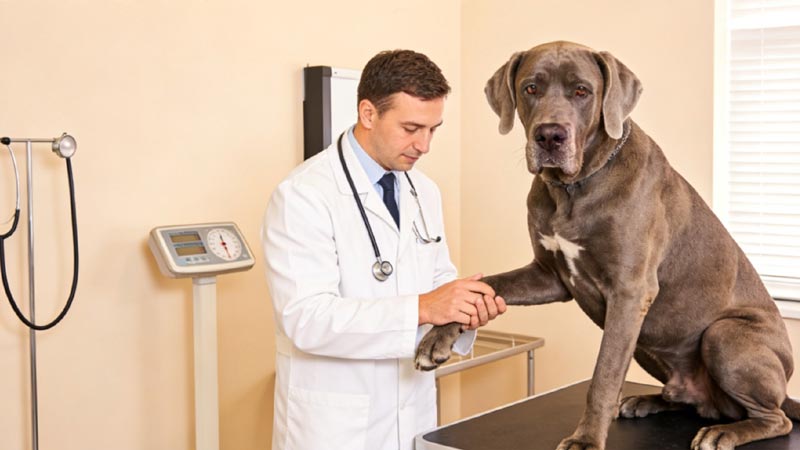
Image generated by AI
Having a big dog? It's not just about huge food bills or less room on your sofa, really. Health risks vary; aging shifts at its own tempo; and when vet help matters, it often shows up sooner than expected.
Big dog breeds like German Shepherds or Golden Retrievers–they often have health problems regular checkups might miss.
Think about it less a ranking from clinics, more a list ranking veterinary priorities of most importance to large-breed owners, based on health risks from size that are bigger deals and easier to prevent. Think about each priority showcasing awesome clinics plus care sites handling stuff well, pulling from real US providers.
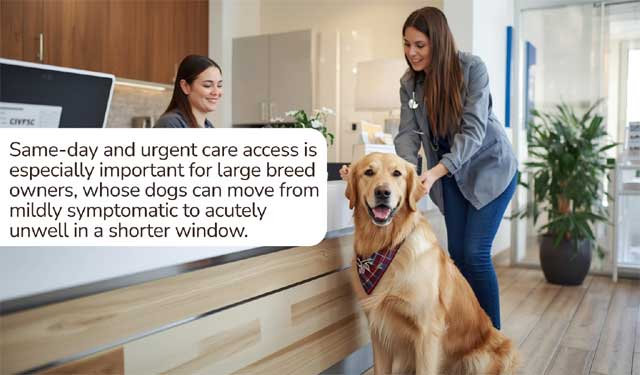
1. Same-day and urgent acces
When you've got a big dog waiting a bit to see a vet about some weird thing matters more than it might for smaller pups.
GDV joint issues or cardio problems can get worse really fast; so waiting days for just a normal vet appointment isn't always safest you know. Getting same-day drop-off access quickly is just super practical before you actually need that.
It's tricky because usually getting routine primary care takes days even weeks and many don't plan for urgent stuff. Finding a clinic truly offering same-day care and not just emergency overflow? It may save you headaches.
Who does this well - Sploot Veterinary Care (Denver metro, CO)
Operates across multiple locations with hours of 8am to 8pm, 365 days a year, including same-day appointments and urgent drop-offs.
For owners trying to find local animal urgent care in Denver, CO, Sploot offers a model that combines primary and urgent care under one roof. So, for owners of bigger dogs it means maybe you skip that pricey ER visit and get seen quickly, without just waiting for any old appointment.
This kind of joined-up support? It can truly matter when dealing with urgent problems.
2. Orthopaedic and joint health monitoring
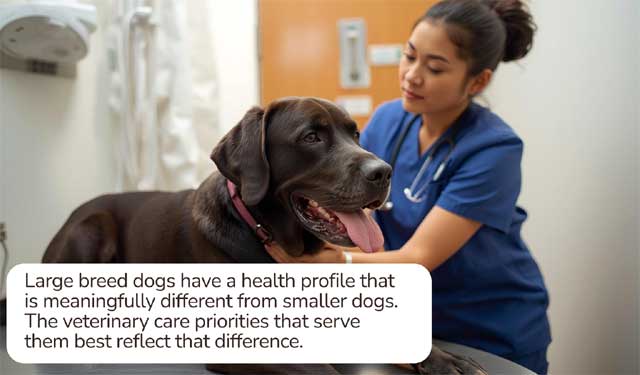
Large breed dogs seem way more prone to hip elbow or even CCL issues does size matter?
Body weight puts stress on growing and adult joints, creating different risks as a pup and lasting through life.
If treating larger dogs, a vet likely starts talking to orthopedics early and during checkups looks at how they move plus joint flexibility and will have plans ready should things change.
When your pup’s little proper growth is what matters plus feed that matches breed along exercise building up their joints, all without pushing too hard.
As dogs age, mobility plus how they walk should get checked. It might allow acting early via supplements, weight tweaks, pain relief or rehab so the dog's life is still good. Usually, if you're seeing a dog limp, maybe it's too late.
Who does this well
● Practices with in-house orthopaedic surgery capability or clear referral relationships to orthopaedic specialists, such as BluePearl Pet Hospital or veterinary college teaching hospitals including Colorado State University Veterinary Teaching Hospital and Cornell University College of Veterinary Medicine, are relevant when surgical intervention is needed for CCL repair or hip disease.
● Sploot Veterinary Care's primary and urgent care model supports early intervention for joint concerns, with in-house imaging to assess acute orthopaedic changes when needed.
3. Breed-specific health condition awareness
For big dog breeds keep an eye out; early checks can really help with some common issues.
Knowing some breed quirks plus having a proactive vet would likely ease your mind.
Bloat hits deep-chested dogs such as Great Danes hard; surgery's often needed.
Big dog breeds? Great Danes or Dobermans may develop this heart problem, but it's sneaky and could get worse without you noticing it at all.
Golden Retrievers or Rottweilers? Some breeds have higher cancer risks it seems. Osteosarcoma's a nasty bone cancer big dogs get way more than small ones. None of this needs alarm but maybe chat 'bout it with your vet; they'd know best.
Who does this well - Veterinary college teaching hospitals across the US
Including the University of Florida Veterinary Hospitals and NC State Veterinary Hospital, offer specialist oncology and cardiology services for cases that require advanced diagnostic input or clinical trial access.
A primary care veterinarian who is familiar with a dog's breed profile and raises relevant health conversations proactively at wellness visits is the first line of breed-specific care for most owners.
4. Weight management and large-breed nutrition
Obesity? It makes almost every health problem worse for big dogs.
When dogs carry extra pounds more stress hits their joints, hearts work harder and research ties it to living shorter lives. If dogs already face higher risk of joint or heart issues keeping weight down? Probably the most helpful prevention tool.
Puppy chow for big dogs? Gotta pay attention, really.
Large-breed formulas control growth reducing orthopaedic disease risks, plus puppy-to-adult food timing matters.
Feeding a big adult dog food meant for any dog size? It might mean too much chow especially given various calorie counts per serving.
At each checkup a vet ought to score the dog's shape and give you unique feeding tips matching its age weight plus how busy it is.
Should body condition scores shift adversely between visits, adjusting diet early proves far simpler than fixing advanced obesity.
Who does this well - AAHA-accredited primary care
Any AAHA-accredited primary care practice will include body condition scoring as part of a comprehensive wellness exam. When searching primary care providers, one thing worth prioritizing: they communicate these assessments clearly, including actual feeding guidance, instead just providing a number.
5. Preventive visit frequency across life stages
Big dogs and giant breeds often age quicker than smaller ones.
For bigger dogs vet advice often considers six or seven years old as senior age, maybe even sooner if they're giant breeds like Great Danes or Irish Wolfhounds. So, think about it, the window for checking
on older dogs might actually open sooner than owners realize; a yearly checkup might not cut it as pup gets older.
For healthy grownup dogs of any size yearly checkups should work.
For bigger dogs getting older maybe see vet twice a year; could help track weight, check teeth, update parasite stuff and get bloodwork so any new problems show faster should dogs need quick help.
When vets assess a sick animal it might help if they've got solid health records.
Preventive care also customizes parasite prevention for your life, maintains heartworm protection and keeps vaccinations current.
Skipping vet trips when your dog seems fine makes sense however big dogs live shorter lives so you might miss something important.
Who does this well
Practices with wellness plan options, including Sploot Veterinary Care's membership model, can make the financial side of consistent preventive visits more predictable for large breed owners who face higher per-visit costs due to medication and treatment dosing at larger weights.
Also, AAHA's canine life stage guidelines provide veterinarians with size-adjusted recommendations for exam frequency, screening, and preventive care. Asking a prospective veterinarian how they approach senior care for large breeds specifically is a reasonable and informative first appointment question.
6. Dental health and oral care planning
Dental problems commonly affect dogs but often go unaddressed since clear signs usually show up later on.
Often, by time a dog shows clear discomfort, like avoiding hard food or pawing; underlying issues have been brewing.
Dental care? Yup, extra important for big dogs since gum disease folks would engage with can affect their kidneys liver and even heart you know. Dental work's risk from anaesthesia? Think size, age so maybe start cleanings sooner to avoid harder work later on.
Home care habits, including regular brushing with a veterinarian-approved toothpaste and the use of dental chews with the Veterinary Oral Health Council (VOHC) seal, can meaningfully reduce tartar accumulation between professional cleanings.
Starting these habits during puppyhood, when a large breed dog is less resistant to handling, is the most effective approach.
Who does this well
● Full-service primary care practices including Sploot Veterinary Care, Urban Vet Care (Denver, CO), and AAHA-accredited hospitals in any market include dental assessment as part of routine wellness exams and can advise on the timing of professional cleaning.
● Practices with in-house dental surgery capability, including the Schwarzman AMC and most veterinary college teaching hospitals, are relevant for large breed dogs with advanced periodontal disease requiring extractions or oral surgery.
● Broadview Animal Clinic (Denver, CO) has been specifically noted by reviewers for accessible pricing on professional dental cleanings, which can be relevant for large breed owners managing the cost of routine dental care over a dog's lifetime.
Clinics referenced in this guide
The following providers are referenced across the priorities above. This is not a ranked list. Each represents a different type of veterinary care setting that is relevant at different moments in a large breed dog's life.
● Sploot Veterinary Care (Denver metro, CO): Primary and urgent care, 8am–8pm, 365 days a year. Same-day appointments and urgent drop-offs. splootvets.com
● Schwarzman Animal Medical Center (New York, NY): 24/7/365 specialty and emergency care, 20+ specialties. amcny.org
● BluePearl Pet Hospital (29 states): Specialty and emergency network, most locations open 24 hours. bluepearlvet.com
● Urban Paw Veterinary Health and Rehabilitation (Denver, CO): General care integrated with orthopaedic rehabilitation services. urbanpawvet.com
● Urban Vet Care (Denver, CO): AAHA-accredited full-service hospital with 8 doctors. urbanvetcare.com
● Broadview Animal Clinic (Denver, CO): Established full-service clinic, noted for accessible pricing on dentistry and general care. broadviewanimalclinic.com
● Veterinary college teaching hospitals (nationwide): Advanced specialist care, complex surgery, and diagnostic imaging. Locate accredited programs at avma.org
A practical checklist when choosing a vet for a large breed dog
Before selecting a primary veterinary provider for a large or giant breed, the following questions are worth asking:
● Do they have experience with large and giant breeds specifically, including familiarity with breed-predisposed conditions?
● Is same-day or urgent drop-off access available when a concern arises between routine appointments?
● Are in-house diagnostics available, including imaging and laboratory services, to reduce referral delays?
● What is their approach to pain management and orthopaedic monitoring as the dog ages?
● Is the facility physically suited to large dogs, with adequate space, handling protocols, and equipment?
● Are costs and estimates communicated clearly, given that large breed care is typically more expensive across medications, procedures, and surgery?
● Do they have a clear referral pathway for when specialist or emergency care is needed beyond their scope?
Final note for large breed owners
Finding your vet now before you need one fast would be helpful. So that means scheduling a basic check-up, understanding typical communication methods and figuring out options for emergencies ahead of time.
Not all large dogs share the same health risks plus breed guidance really matters.
For big dog owners, best vet investment? Find a clinician who knows your dog translates breed advice into personalized care and is accessible when things shift.
Think about it: Getting in good with folks early on, not just when stuff hits the fan, might stand as the most sensible thing someone owning a bigger dog could do.
You May Also Like
 Dog HealthHow Long Do Dogs Live With Encephalitis?
 Dog Toys & Puppy ToysThe 5 Best Puzzle Toys For Large Dogs (2022)
 Help & AdviceThese 10 Dog Breeds Novice The Best Not To Keep!
 Breed ComparisonBelgian Malinois vs. German Shepherd: Which Is Better?
 Breed ComparisonDoberman vs. Rottweiler: Which Is the Better Guard Dog?
 Breed ComparisonAlaskan Malamute vs. Siberian Husky: Which Is Better?